Born to Be a Child
For children aged 7 to 77: dragons, cosmonauts, sweets and supervillains, in the grammar of comics.
Born to Be a Child is Nathalie Latil’s comics pop art collection: original paintings drawn from childhood, comic books and superheroes.
A cabinet of childhood curiosities
Born to Be a Child is Nathalie Latil’s most narrative collection, and probably her most personal. The artist opens her box of memories: her family turned into comic-strip characters, childhood travels told in sweet wrappers, the monsters that haunt the night, the heroes and above all the supervillains of comics. The title, echoing Born to Be Wild, claims a freedom: never quite ceasing to be a child.
The grammar is that of comics, which pop art has raised to a pictorial language since Lichtenstein: broken lines, saturated colour, big round eyes, onomatopoeia. But behind the fantasy the humour is grown-up. You’ll meet a sandpit Keeper of the Seals, a boxer in baby clothes, tipsy cacti and a cosmonaut dog.
Many techniques
The collection mixes acrylic in flat areas ringed with black, collages of sweet wrappers cut out one by one in the tradition of papier collé, and drawings with highlights. Some works play with relief, like Photo-Maton and its hinged eyelids.
After Lichtenstein
Ever since Roy Lichtenstein blew comic-book panels up to the scale of history painting in the early 1960s, comics have been one of the great territories of pop art. Nathalie Latil does not borrow his Ben-Day dots: she keeps the black outline, the bold colors and the story told in a single image, and puts them to work in a world of her own. The Joker turns punk with neon-green hair in *Acid Joker Batman*, Harley Quinn blows a bubble-gum bubble in *Batman Harley Queen*, and the heroes are often children: a pirate guarding his beach buckets, a beach bandit, a boy riding a shark.
Series like comic albums
- Comics: superheroes and pop icons, from Batman to Annie Lennox.
- The Family Stone: the artist’s own circle drawn like a comic book, with a title that salutes Sly and the Family Stone.
- Avec des Gants: little boxers and love that packs a punch.
- Chez le Confiseur: dresses made of candy wrappers and mountains of sweets.
- Space Oddity, Le Désert, Les Rondes de Nuit: astronauts, cacti and witches, for dreams of adventure.
The series
The artist's circle in comic-strip form, with a title that salutes Sly and the Family Stone. Elliot guards his buckets like pirate treasure, Betty holds up the beach, Charly rides a shark, and the whole tribe poses at the window for the family portrait. Candy colours, radiating suns, stacked gold coins: a family album full of tenderness and mischief.


Collages of sweet wrappers, cut out and assembled one by one, in the pure tradition of the pop papier collé. Chez le Confiseur, at the sweet shop, takes Nathalie Latil back to her childhood memories of island trips and sugary treats: a Martinican and a Malian woman in dresses of shiny paper, an igloo, a drunken boat under a coconut palm, and a triptych on consumption, before, during and after the snack.


Characters who all wear gloves, boxing gloves or velvet ones, an ironic symbol of a world we are told to handle with kid gloves. A boxer in baby clothes, an egg hatching mid-fight, love at first sight that looks like a punch: Avec des Gants talks with humour about the tact so often missing from human relations.


Under a radiating sun, cacti and snakes take human shape and seem to have overdone the tequila. Le Désert is heat, tipsiness and slapstick, translated into saturated colour, red rays and broken lines.


A nod to Bowie and to childhood fascination with space. A cosmonaut robot, a dog in a space suit on roller skates, a disco ball in orbit, an alien queen and creatures more funny than frightening: Space Oddity unfolds a whirl of deep blues pricked with yellow stars.


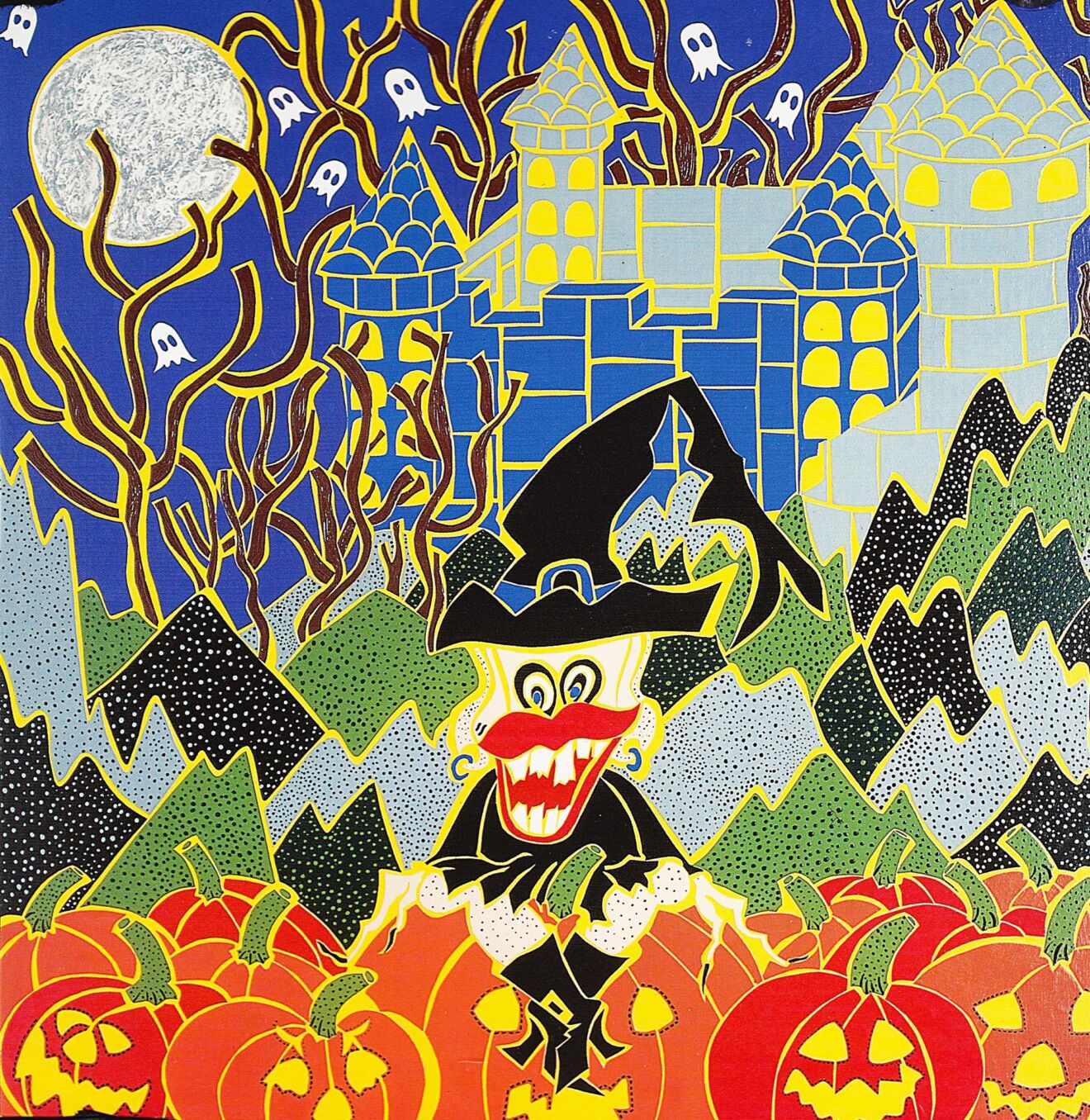
When children sleep, the monsters do their rounds, and the title can't help recalling Rembrandt's Night Watch. A witch on her branch, an electric mad dog, a magician bent over his crystal ball, Moscow nights and Halloween nights: in a world of midnight blue, the series fills dreams and nightmares with more fantasy than fear.


Legendary dragons and Eastern deities in a blaze of reds and oranges. Shiva meditates at the heart of the flames, the dragon writhes in the fire. Tout Feu Tout Flamme, all fired up, blends mythology and comics with crackling energy.


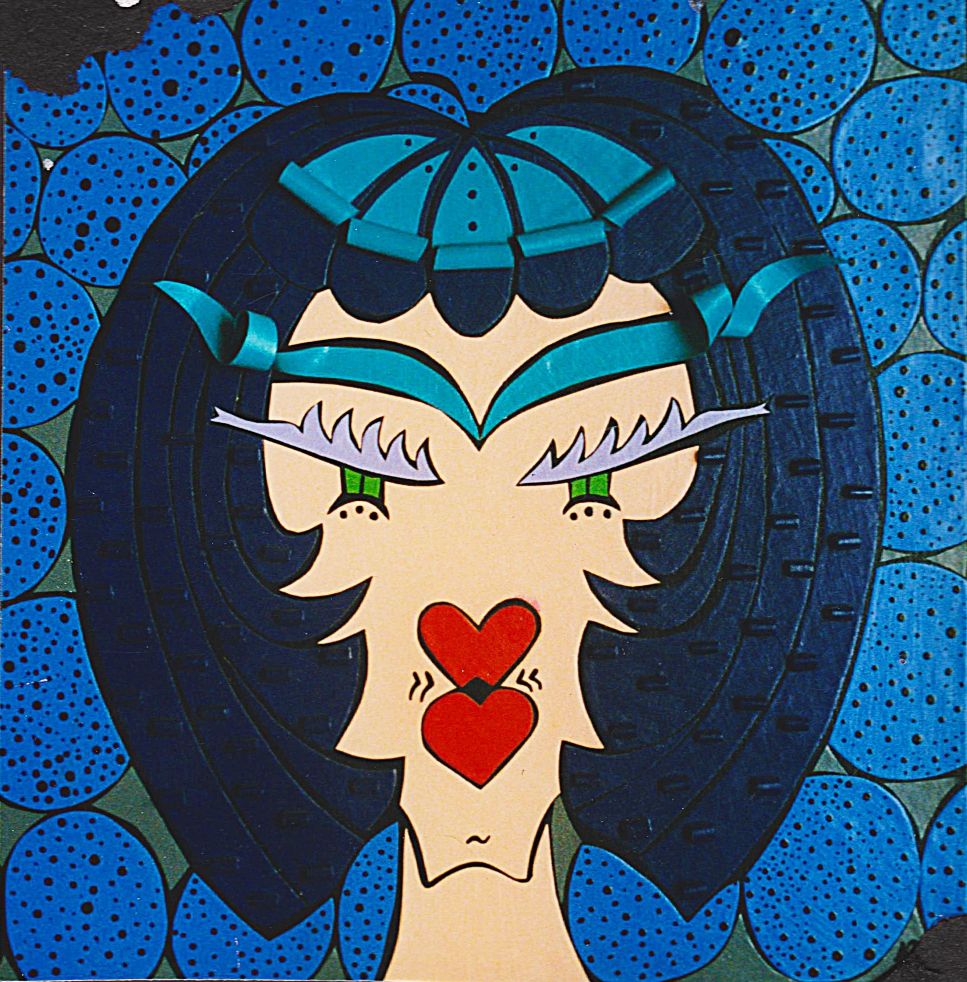
Paris nights and their drag queens, worthy of an Almodóvar film. Blue wigs, outsized lashes, heart-shaped lips and 1970s daisies: Les Girls play with appearances and gender codes like grown-up children. The series also includes a self-portrait of the artist, gap teeth and all.



Comic-book heroes and, above all, supervillains, as seen by Nathalie Latil. A punk Joker with neon-green hair, Harley Quinn and her bubble gum, Annie Lennox and Pink in full voice, a kokeshi doll under a rising sun, a blonde woman sitting in the moon. Faces cut out and mounted, ringed in black, on grounds of waves: pop art in its most direct line of descent from mass culture.


Frequently asked questions
Who is this collection for?
For children aged 7 to 77, as the French saying goes. These works fit naturally in a child’s room, but also in a living room, a kitchen or a study that has stayed playful.
Are the works still available?
Most have joined private collections. Each can be painted again as a studio replica: Nathalie Latil repaints the composition by hand, in the size of your choice. Not a reproduction, but an original work, signed and certified.
Can I commission a personalised work?
The Family Stone series grew out of portraits of the artist’s circle. On request, Nathalie Latil can consider a commission in that spirit; just get in touch to talk about it.
Do these paintings suit a child’s bedroom?
Yes, it is one of their natural homes, but they appeal just as much to adults.